



7 things your car does that look like a fault but probably aren’t
Cars can do some strange things. A light flashes, the engine suddenly sounds different or something carries on running after you’ve parked. It’s easy to assume there’s a problem, particularly when your car does something you’ve never noticed before. But some seemingly worrying behaviour is actually part of the way modern cars are designed to work.
Here are seven examples that can look like a fault, but often have a perfectly normal explanation.
1. Your stop-start system suddenly stops working
If your car normally switches the engine off when you’re waiting at traffic lights but suddenly stops doing it, you might assume something has gone wrong. In fact, stop-start systems only operate when certain conditions are met. Your car may keep the engine running if the battery charge is low, the engine is still cold, you’re using a lot of heating or air conditioning, or the outside temperature is particularly low or high. So, if stop-start works some days and not others, it doesn’t necessarily mean there’s a fault. If it stops working completely or a warning light appears, however, it’s worth checking your handbook or getting the car looked at.
2. The engine fan keeps running after you’ve parked
You’ve switched off the engine, locked the car and started walking away, but you can still hear a fan running under the bonnet. It can sound as though you’ve forgotten to switch something off, but the cooling fan on some cars can continue running after the engine has been turned off. It does this to help manage the temperature of the engine and other components. It should switch itself off. If it runs for an unusually long time, happens very frequently or you notice signs of overheating, that’s a reason to investigate.
3. Your diesel engine suddenly sounds different while you’re driving
If you drive a diesel with a diesel particulate filter (DPF), you may occasionally notice a change in the way the car behaves. The engine note might sound slightly different, the idle speed may be higher than usual or the cooling fan may run. This can happen while the car is regenerating its DPF, a process that raises the exhaust temperature to help burn off soot collected in the filter. You may never notice it happening at all, but if you do, it isn’t necessarily a fault. A DPF warning light is a different matter and shouldn’t be ignored.
4. Your brakes make a slight clunk when you first move off
A single clunk or click shortly after setting off can be alarming, particularly when the car otherwise feels completely normal. On some cars, this can simply be the anti-lock braking system (ABS) carrying out a self-check. You might hear a brief mechanical sound or even feel a small sensation through the brake pedal.
If it happens consistently at around the same point after starting your journey and then disappears, it may be completely normal for your vehicle. Repeated knocking, grinding or any change in braking performance should be checked.
5. Your automatic gearbox won’t let you move the gear selector
You start the car and try to move the selector out of Park, but it won’t move. Before assuming the gearbox has failed, check whether you’re pressing the brake pedal firmly. Most modern automatic cars have a safety feature called a shift lock, which prevents you from moving out of Park unless the brake pedal is pressed. On some cars, other conditions also need to be met. If you’re doing everything correctly and the selector still won’t move, check the vehicle handbook rather than forcing it.
6. Your electric parking brake makes noises after you’ve switched off
Cars with an electronic parking brake can sometimes make whirring, clicking or mechanical noises when the brake is applied or released. Depending on the vehicle, you may even hear noises shortly after switching the car off as different systems shut down or carry out checks. It can be odd if you’re used to a traditional handbrake, but a brief mechanical noise isn’t necessarily a sign that something is wrong. Warning messages, repeated unusual noises or a parking brake that doesn’t hold or release properly are another matter and should be investigated.
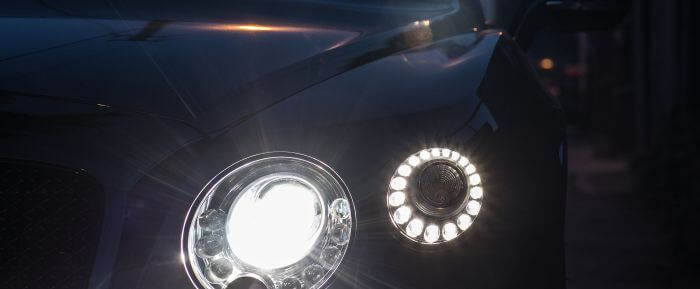
7. Your headlights stay on after you’ve locked the car
You park, lock the car and notice that the headlights are still on. Your first thought might be that you’re about to come back to a flat battery. Before going back to the car, give it a moment. Many vehicles have a ‘coming home’ or ‘follow me home’ lighting function that keeps the headlights on briefly after you’ve switched off and locked the car. It’s designed to light your way when you’re walking away in the dark. The lights should switch off automatically after a set period, and on some cars you can change or disable the feature through the vehicle settings.
Know what’s normal for your car
Modern cars do a lot behind the scenes, so something that seems unusual isn’t always a sign of trouble. Your vehicle handbook is a useful place to start if you notice something you haven’t seen or heard before. It can tell you which features your particular model has and what different lights, sounds and messages mean.
The important thing is not to assume that every unusual behaviour is harmless. If something persists, a warning light appears or the car feels different to drive, it’s always sensible to get it checked.
Knowing what’s normal for your car makes it much easier to recognise when something really isn’t.


